GamblersPost Gamblers Post is a dedicated news and networking portal in the online gambling industry which features news, opinions, interviews as well as product and software reviews.
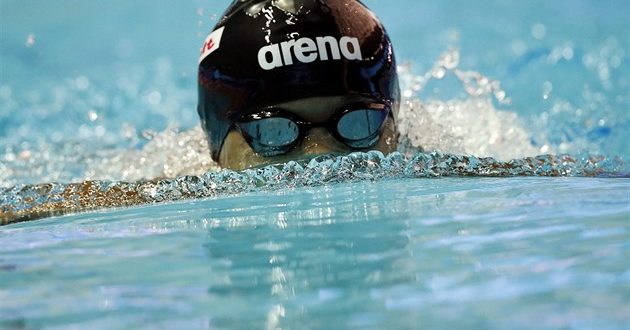
You have to search a lot into the FINA 2019 World Aquatics Championships website to locate Sangay Tenzin’s accomplishments. This 16-year-old boy from mountainous Bhutan didn’t grab a medal, but is considered as one of the winners of the competition, something like a symbol for world swimming, besides the top names from China, the USA or Australia.
In fact, Sangay Tenzin finished 120th (out of 120!) to the 100m. freestyle discipline, swimming at a 1:07.28 time in Gwangju, South Korea. Some days before he did better in 50m. freestyle, the first discipline a swimmer from Bhutan ever competed, marking 125th place out of 130 total swimmers. Times might seem too slow for a top-class swimmer competing in the world aquatics rendez-vous, but it’s something really deserving applause for someone who has never swum in a Olympic distance (50m.) swimming pool and learned to swim crossing the a small river nearby his hometown!
His fellow Kinley Lhendup is even younger, just 15 years old, and has an accordingly exciting story. As he grew up in Thimphu, the capital of the mountainous kingdom of the Himalayas, he had the privilege to use the only closed swimming pool of the country. But he had nobody to teach his the different styles, so he addressed the Youtube videos!
No laughs, please. He learned the butterfly, backstroke and breastroke techniques only by watching experts and try to imitate them. This swimming passion pushed his to earn a swimming scholarship by FINA and we went to train in Phuket, Thailand. He showed that he could swim all styles, as he competed in the 200m. individual medley, where he finished last after swimming more than a minute slower than the world record.
Bhutan, a landlocked country with no lakes and full of mountains, is one of the newest FINA members, joining the aquatics world only in 2017. There youngsters proved to everybody that the only thing one must have to swim is no pools and swimming trunks and glasses, but passion. And also, they earned their right to represent their country at highest level, because they’re winners on their own.
After FINA changed their policy back in 2010 and opened their gates to new members, more than 30 new countries (from Africa, Caribbean and Oceania) send their athletes, mostly swimmers, in World Aquatics Championships. There are a lot of stories which deserve to be told about the difficulties of the athletes, who just want to earn a place in qualifying heats. Some of them didn’t see a proper swimming pool for years, training in rivers, lakes or the dangerous open sea.
For most of them, the inspiration came from Eric Moussambani back at the 2000 Summer Olympic Games. Moussambani, an athlete from the tiny African nation of Equatorial Guinea, received mass media attention at 100m. freestyle discipline, where he finished last, more than double the time of the first swimmer. Nicknamed “Eric the Eel” by the media, he sent his own message to all those representing backward swimming nations, but trying to find their place under the sun.
A record number of 194 nations attended the 2019 World Aquatics Championships. There are more to come in two years at Fukuoka, Japan as there are still 17 nations which didn’t participate.